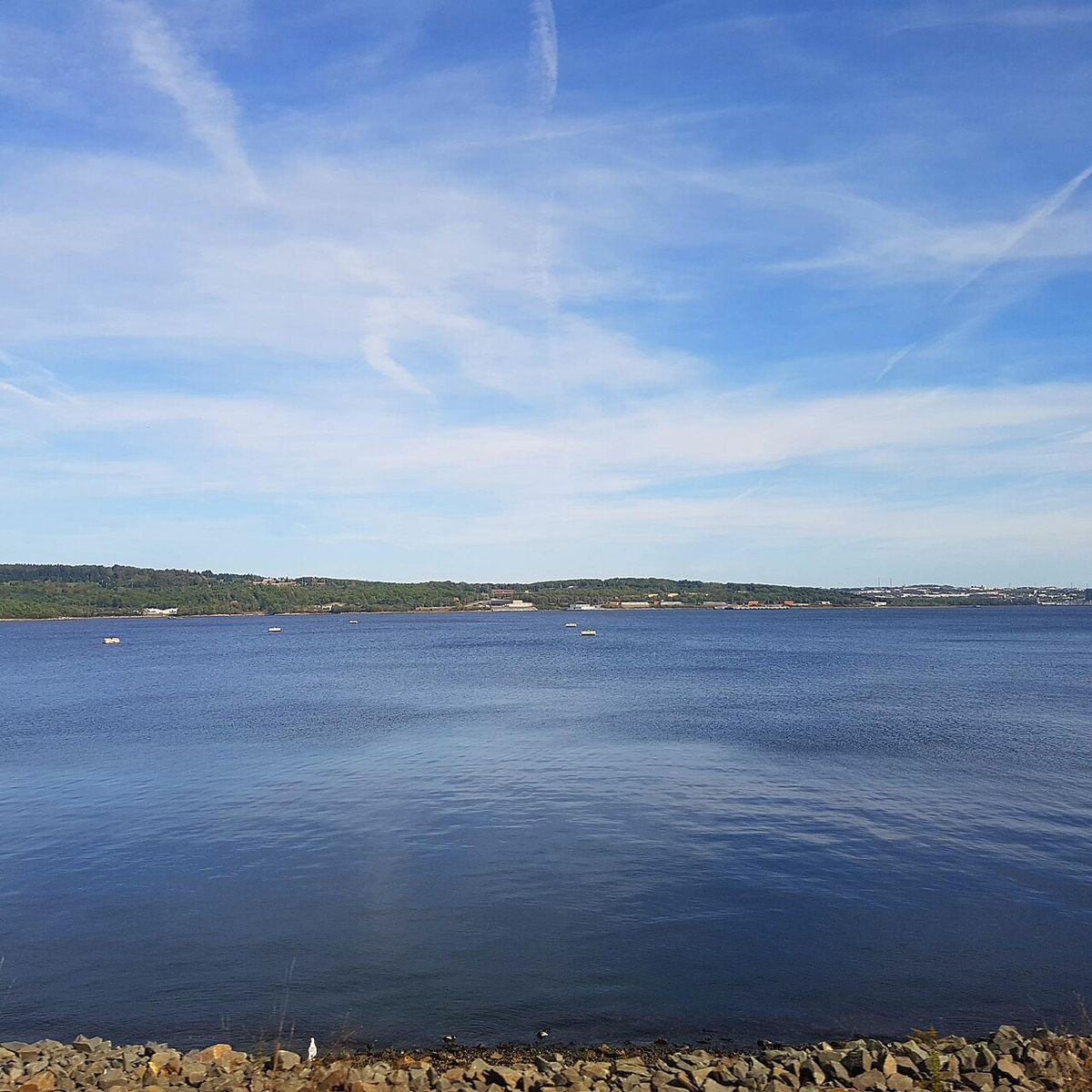
Bedford Basin, the sheltered inner harbour of Halifax, Nova Scotia, has been the site of ghost reports spanning several centuries and multiple cultures. The basin served as an assembly point for naval convoys during both World Wars, and its shores have been inhabited by the Mi'kmaq people for millennia before European contact. The area's haunted reputation draws from multiple historical layers. Ghost ships have been reported on the basin's waters — spectral vessels that appear in the fog and vanish when approached, believed to be echoes of the hundreds of warships that assembled here during wartime.
Native Canadian spirits are said to walk the shoreline, and French colonial ghosts from the pre-1749 settlement period have also been reported. The most dramatic connection is to the Halifax Explosion of 1917, when the collision of two ships in the harbour narrows killed nearly 2,000 people and devastated the city. Survivors reported seeing ghostly figures in the blast zone for years afterward.
The basin's calm waters, surrounded by forested hills and often shrouded in Atlantic fog, create a naturally atmospheric setting. The layering of Indigenous, French, British, and wartime histories in a single body of water makes Bedford Basin one of Canada's most historically complex haunted locations.